

Jasmine Cheuk

Redress Design Award

 Finalist

Meet The Designer

“I prioritise post-consumer waste—challenging due to its diverse compositions—and elevate these materials through a distinct aesthetic, reducing reliance on virgin resources and proving that waste can be reintegrated into the fashion market.”
Jasmine Cheuk
“I prioritise post-consumer waste—challenging due to its diverse compositions—and elevate these materials through a distinct aesthetic, reducing reliance on virgin resources and proving that waste can be reintegrated into the fashion market.”
Jasmine Cheuk

Bio

Jasmine Cheuk is a Finalist of the Redress Design Award 2026. She holds a bachelor’s degree in Fashion Design from Nanjing Normal University, China.

Region

Collection

Design Techniques

Redress Design Award Collection

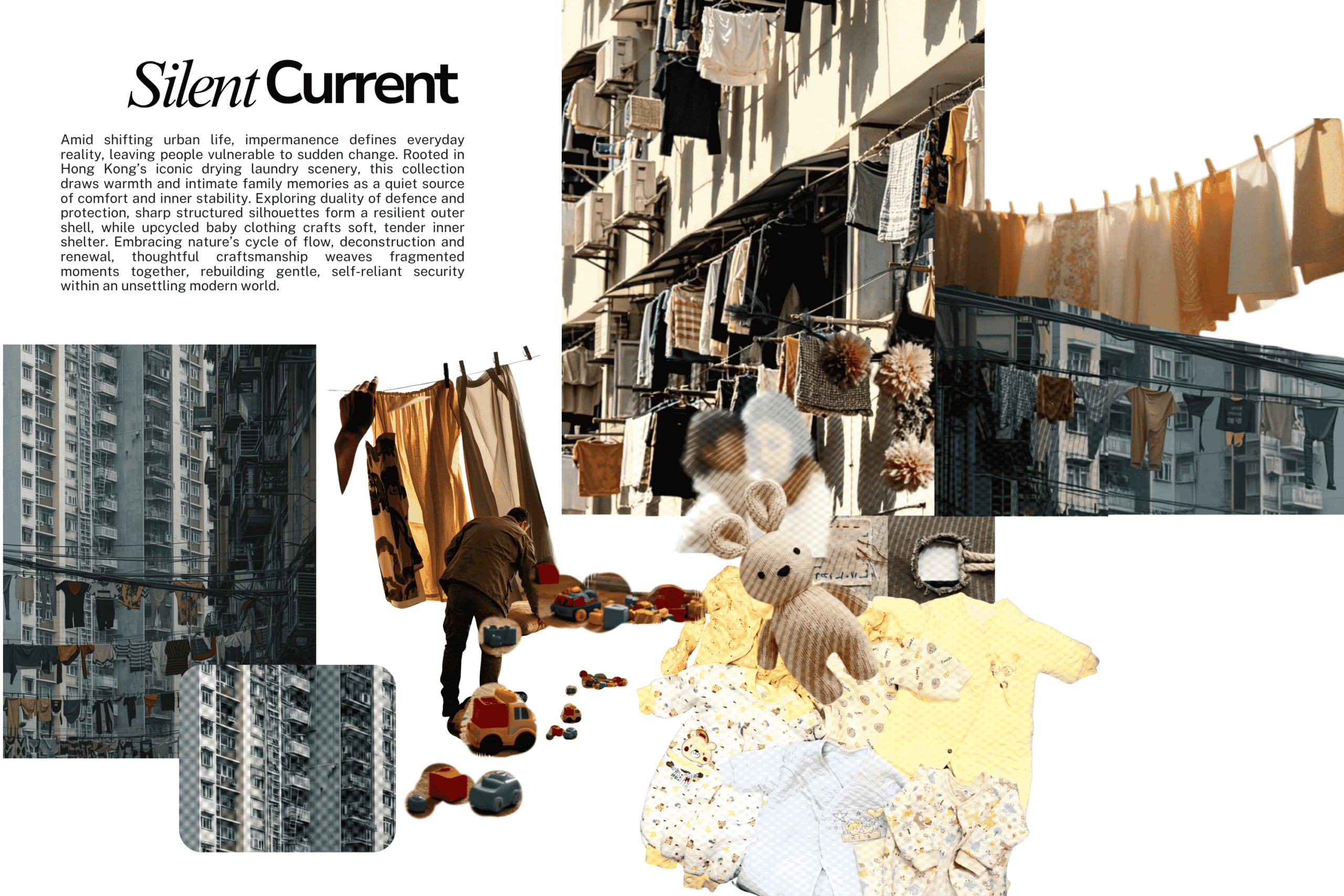
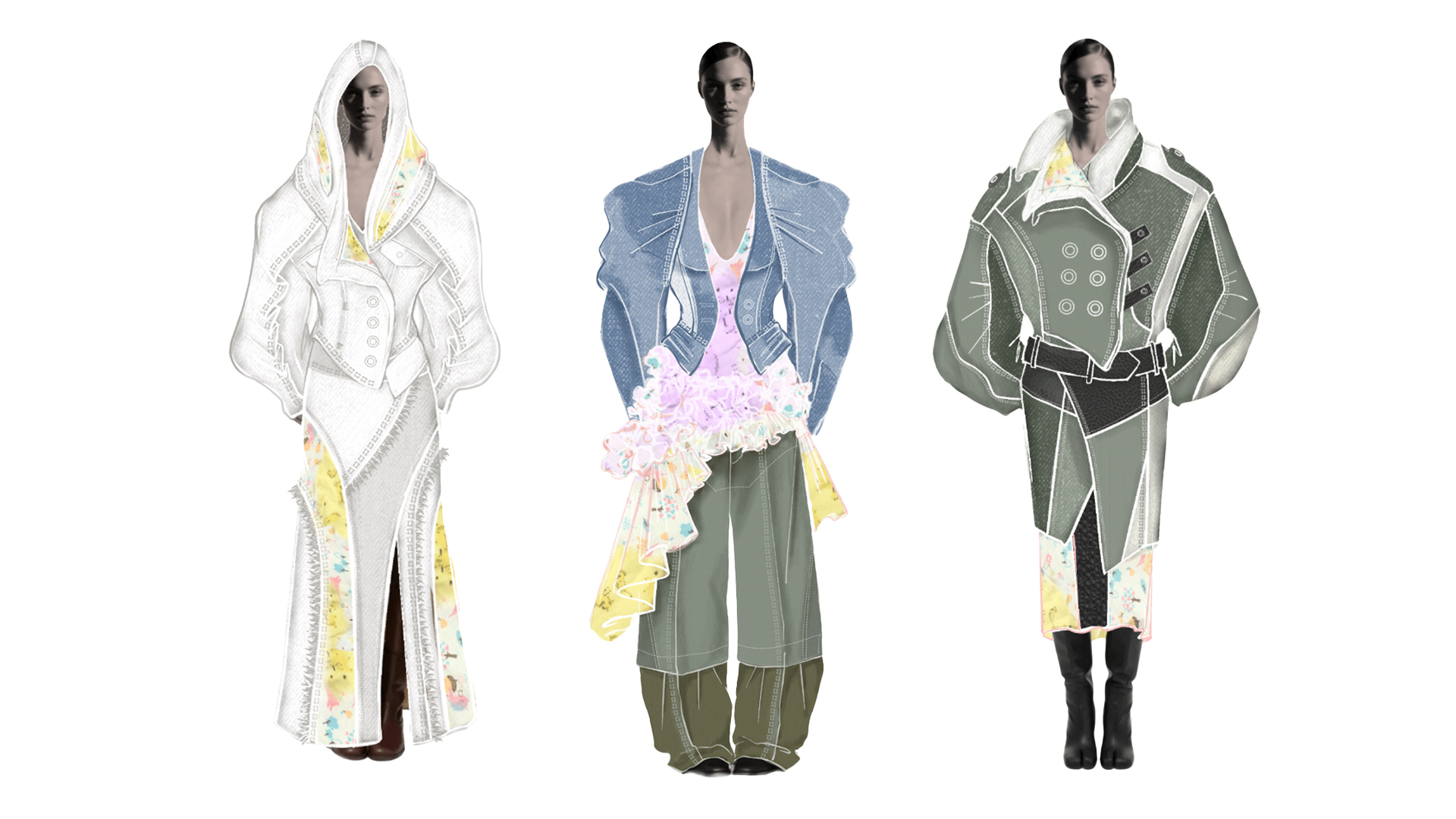
Jasmine’s Redress Design Award collection, ‘Silent Current’, is rooted in Hong Kong’s iconic ‘drying laundry’ scenery. The collection explores the duality of defence and protection, with sharp, structured silhouettes forming a resilient outer shell, while baby clothing is upcycled to create softness and tenderness within. Designed for recyclability, Jasmine uses a threadless ‘interlaced hole-link’ system and detachable fabric buttons, offering a hardware-free construction that ensures effortless disassembly. Modular designs offer multi-way convertible styles and adjustable styling for versatility.

Q&A with the designer

My journey began with a lifelong dream of becoming a fashion designer and launching my own brand, where I naturally found my strength in garment reconstruction. Realising how many resources are poured into a single piece of clothing, I firmly believe its final destination should never be a landfill. This sparked my passion for upcycling and resource restructuring. Throughout my experience learning and mastering upcycling techniques, I have accumulated many intriguing reflections on material life cycles. For this collection, my creative inspiration stems from Hong Kong’s laundry landscapes—the sight of clothes drying in the sun, which to me represents a sense of domestic stability and psychological security. I wanted to translate this feeling of protection into wearable ‘soft armor’, and I look forward to sharing these unique insights and reflections on upcycling with a wider audience through the Redress Design Award platform.

My collection focuses heavily on post-consumer waste, turning what is considered waste back into a valuable resource by using secondhand clothing as my primary material. To ensure circularity, I implemented a modular fashion design framework driven by two signature innovations: my interlaced hole-link stitch and spiral fabric buttons. Instead of permanent hardware, these fabric buttons maintain structural integrity while allowing the garment to be effortlessly disassembled, repaired, or resized. By simply unlacing the fabric strips, consumers can alter the silhouette or sort components for recycling. It is truly a ‘living garment’ that grows with you, bridges the gap between consumer and creator, and offers an easy-to-repair, lifetime wardrobe companion.

My goal is to remain a lifelong learner and a creative problem-solver who continuously introduces engaging, innovative solutions to sustainable fashion. I want to demystify sustainability and seamlessly integrate it into everyday life. I firmly believe that sustainable fashion should be for everyone, not just a small group of people. It should be a normal, fundamental part of the global fashion industry, not a special label. Through my future brand, I aim to create designs where circularity is intuitive and effortless for the everyday consumer.

A belt. It is a magical accessory for me. Physically, the gentle, wrapping sensation around my waist always brings me an immediate sense of groundedness and security, making me feel protected. On a styling level, it is an indispensable companion. Having a petite frame, I am highly conscious of garment lines and structure. A simple belt not only instantly elevates a minimalist outfit with texture and sophistication, but also beautifully defines and balances body proportions. For me, it is both a visual highlight and a source of inner comfort.

A significant amount of pollution stems from our daily habits, but that also means the solutions can be found in our daily lives. Sustainability doesn’t have to be complex or distant; it starts with how we rethink and interact with the ordinary things around us.

Media Enquiry

Contact Us

Become a Redesign Design Award academic partner