

Alexandra Burch

Redress Design Award

 Finalist

Meet The Designer

“Waste is not inevitable, it is a design decision. True sustainability lies in valuing what already exists, and designing for durability.”
Alexandra Burch
“Waste is not inevitable, it is a design decision. True sustainability lies in valuing what already exists, and designing for durability.”
Alexandra Burch

Bio

Alexandra Burch is a Finalist of the Redress Design Award 2026. She is studying for a bachelor’s degree in Fashion Design at Kingston University, London, UK.

Region

Collection

Design Techniques

Redress Design Award Collection

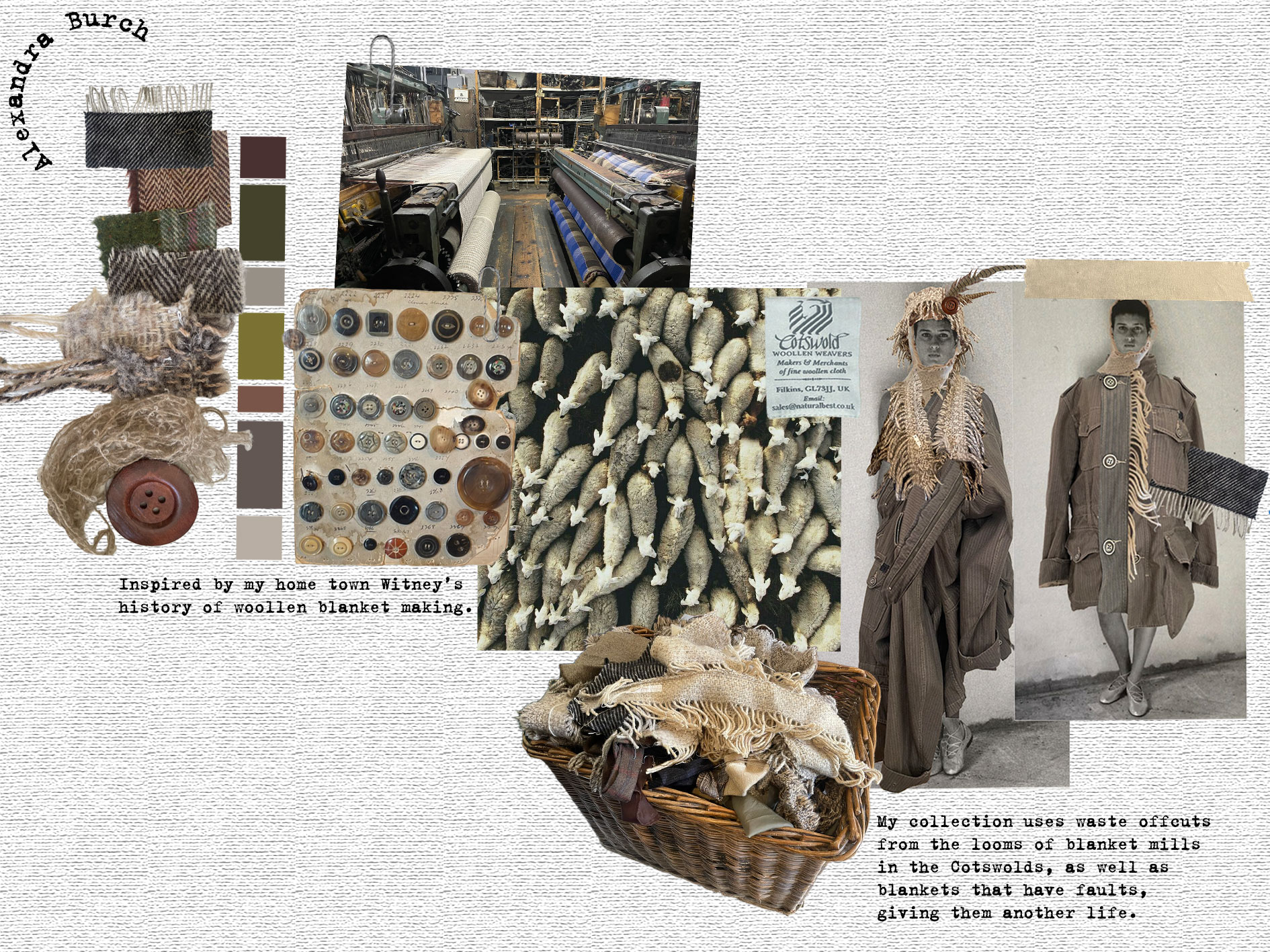
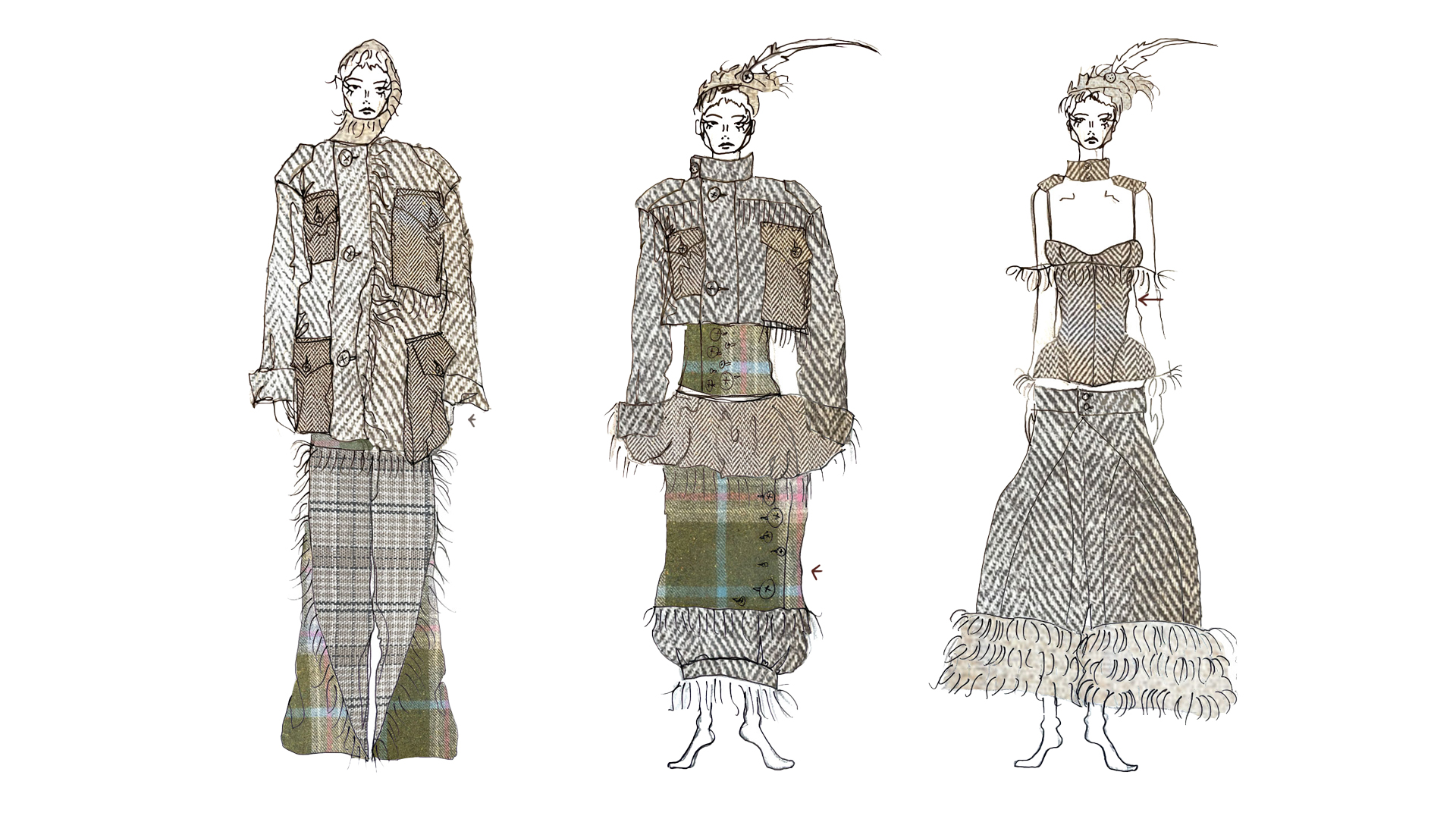
Alexandra’s Redress Design Award collection, ‘Cotswold Remnants’, is inspired by the designer’s hometown in the Cotswolds and its heritage of blanket making. In response to the closure of a local mill, Alexandra salvaged faulty tweed blankets and loom offcuts, transforming the undyed and naturally dyed British wool fabrics into biodegradable garments designed for longevity through craftsmanship and durability. Loom offcuts are integrated as textural details, such as decorative fringes along trousers and jacket, and pouches integrated at the hips of a bodice.

Q&A with the designer

I was inspired by my hometown in the Cotswolds and its heritage of woollen blanket making. A local blanket mill was closing down, and I wanted to celebrate and preserve part of its history through my collection. I sourced surplus stock and loom offcuts from the mill, all made from 100% locally produced wool, and transformed them into new garments. Through this work, I aim to show the value of local craftsmanship while demonstrating how circular design can give discarded materials a meaningful second life.

My collection transforms undyed and naturally dyed British tweed into biodegradable garments designed for longevity. To minimise waste, I incorporated loom offcuts as textural design features, including decorative fringes on trousers and jackets. I also created structured pouches at the hips of a bodice, which are filled with waste materials generated during the making process, ensuring that even small remnants are given a purpose. By sourcing all fabrics locally, I have kept transportation to a minimum and reduced the overall carbon footprint of the collection. Through these approaches, I aimed to demonstrate how waste materials can be reimagined.

As a first-year university student, I am still at the beginning of my journey in fashion. After graduating, I hope to work as a designer within a luxury fashion house, where I can combine creativity with a strong commitment to sustainability. I want to contribute to positive change within the industry by championing responsible material choices, circular design approaches, and more sustainable production practices.

I always bring my phone with me. It helps me reduce the amount of paper I use by keeping notes, sketches, tickets, and documents digitally, and it allows me to access opportunities such as competitions like the Redress Design Award. In keeping with my passion for sustainability, I bought my phone secondhand three years ago and plan to use it for as long as possible. Rather than replacing it when something goes wrong, I repair it when I can, such as replacing the battery to extend its lifespan. It's a small example of how I try to apply circular thinking in my everyday life.

I believe sustainability is one of the most important challenges facing our generation, yet it is often overlooked because meaningful change requires long-term commitment. Through my collection, I hope to encourage conversations about the value of local production, responsible material use, and circular design. Fashion has the power to inspire people to think differently about the resources we use and the future we want to build.

Media Enquiry

Contact Us

Become a Redesign Design Award academic partner